F & F Mold and Die Works
Molded Plastic AUNT JEMIMA & MOSE SHAKERS 5” High Black Americana Circa 1940s
Molded Plastic AUNT JEMIMA & MOSE SHAKERS 5” High Black Americana Circa 1940s
Couldn't load pickup availability
Out of stock
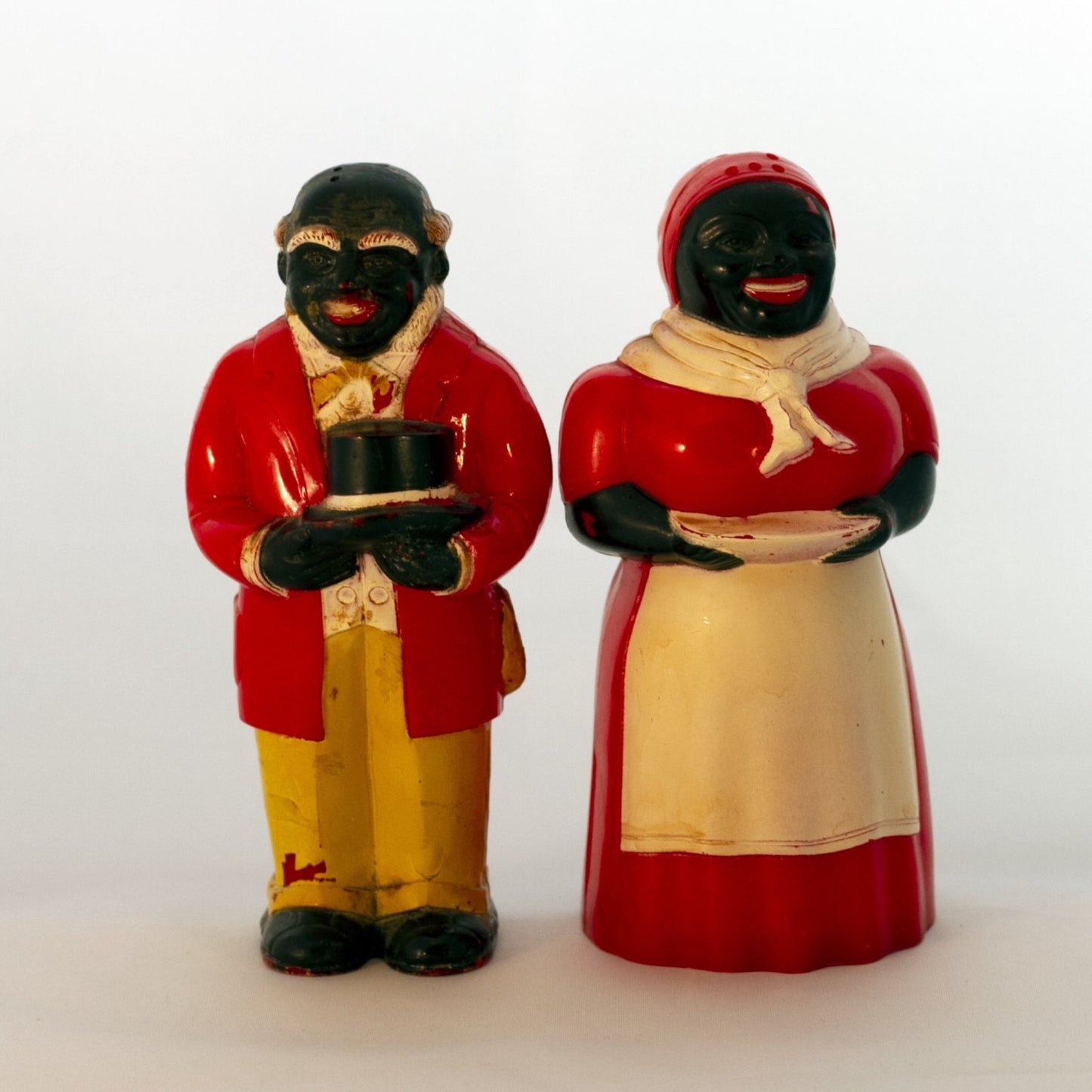
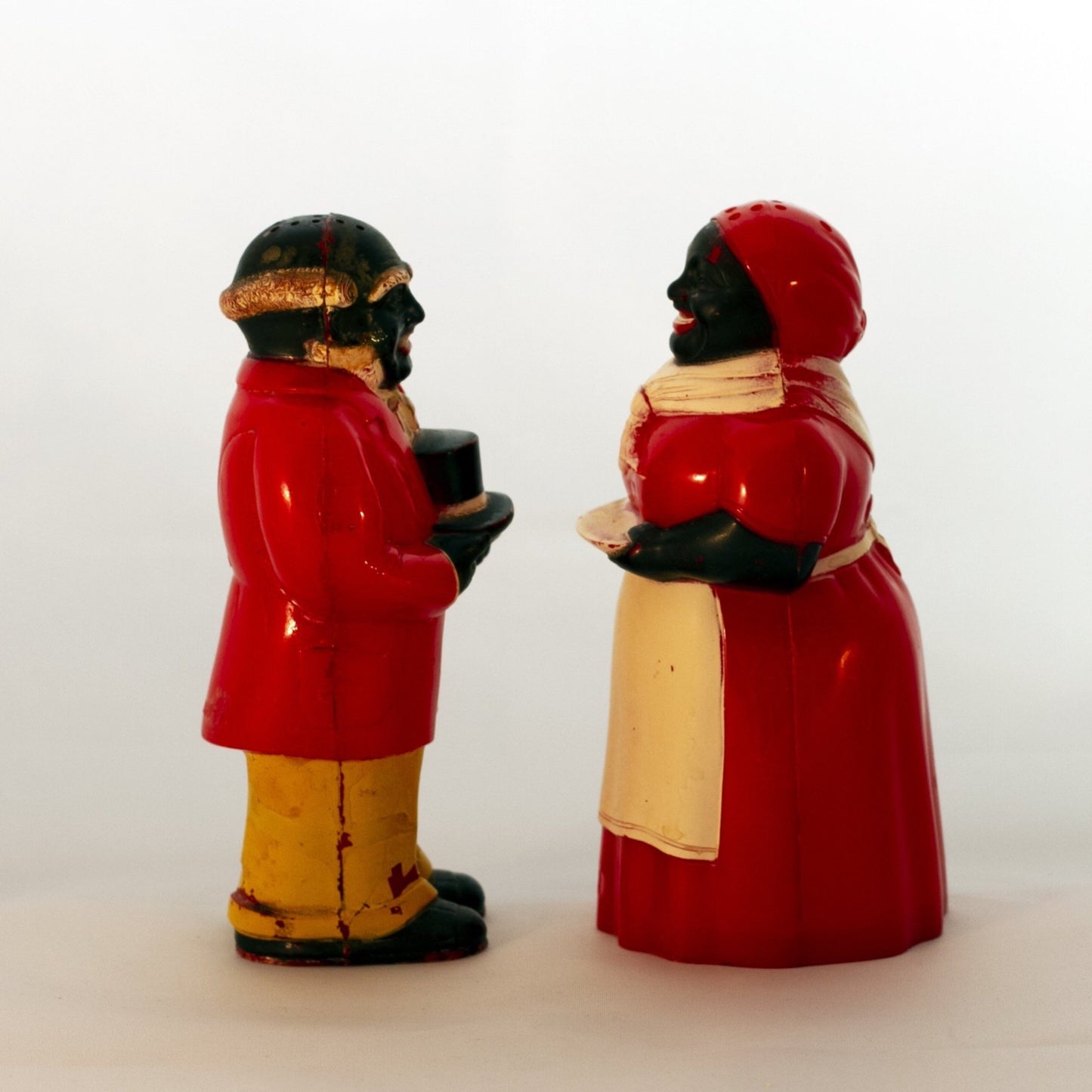
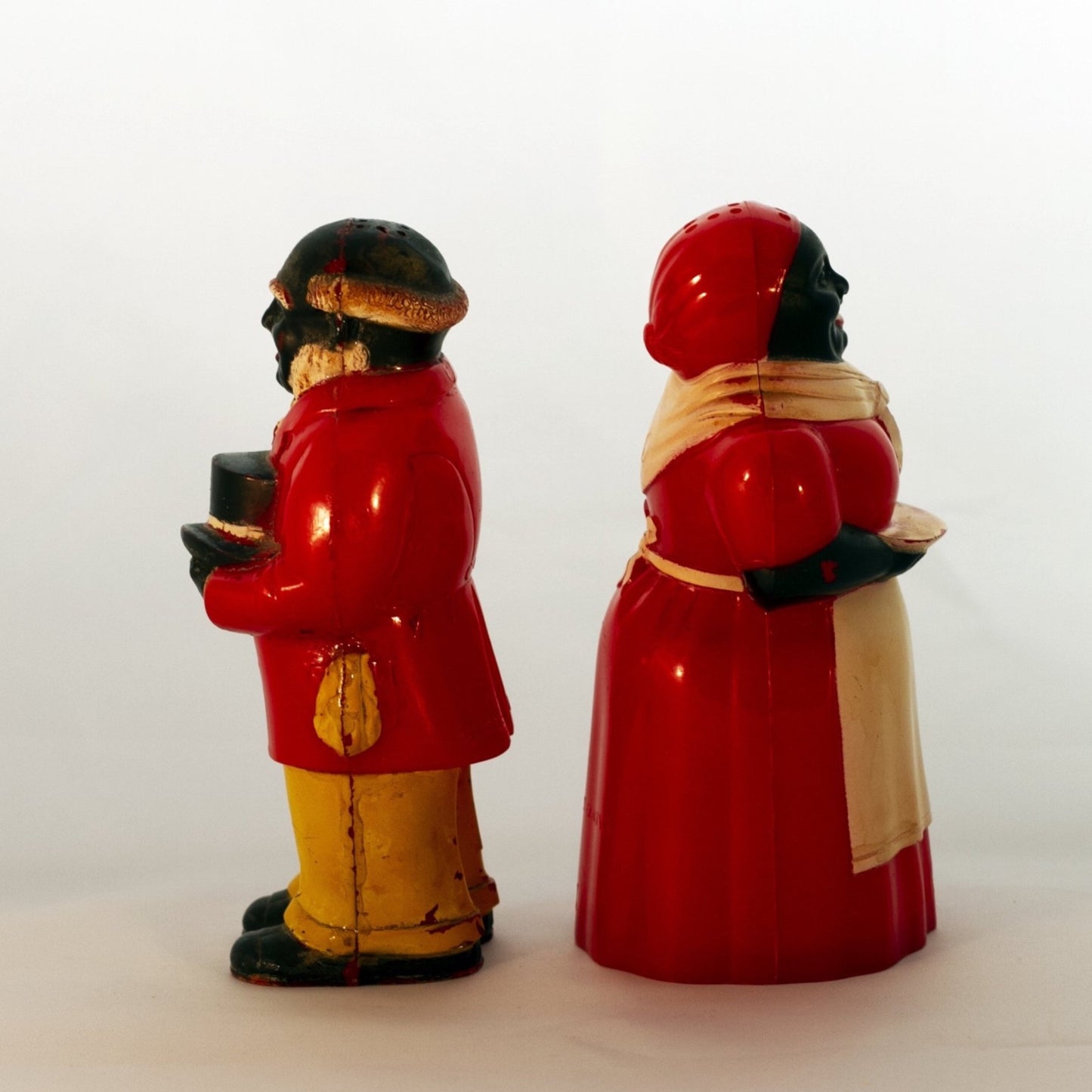
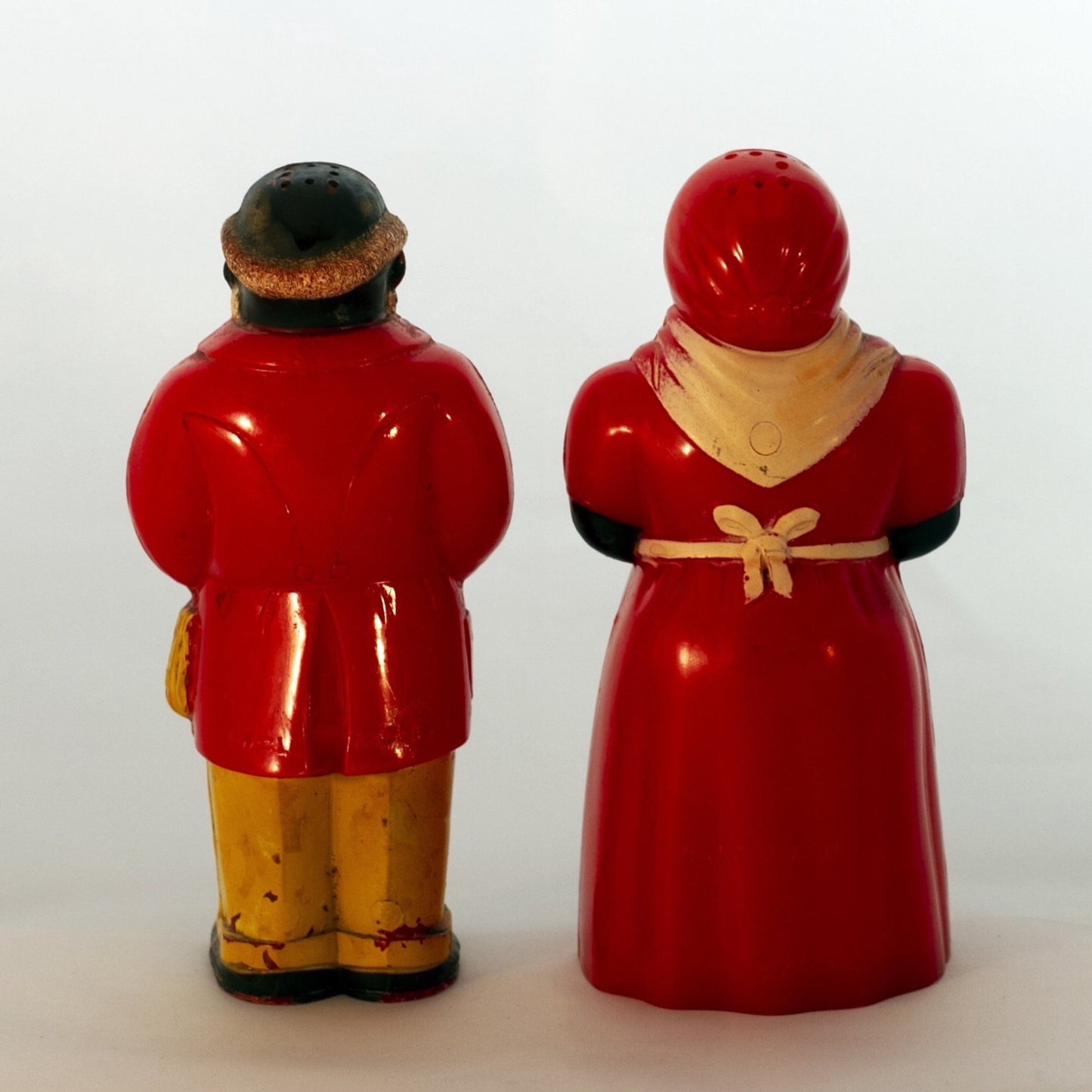
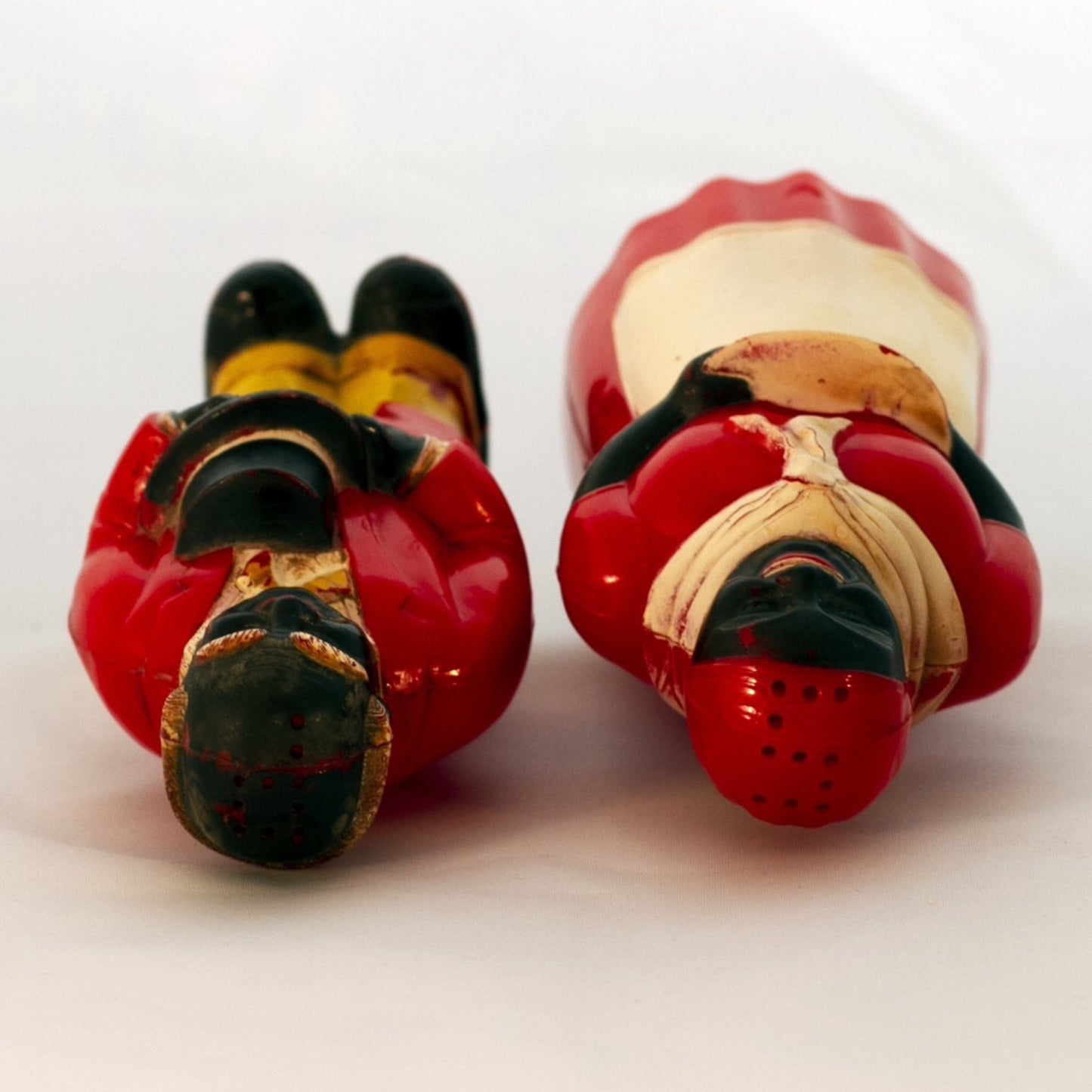
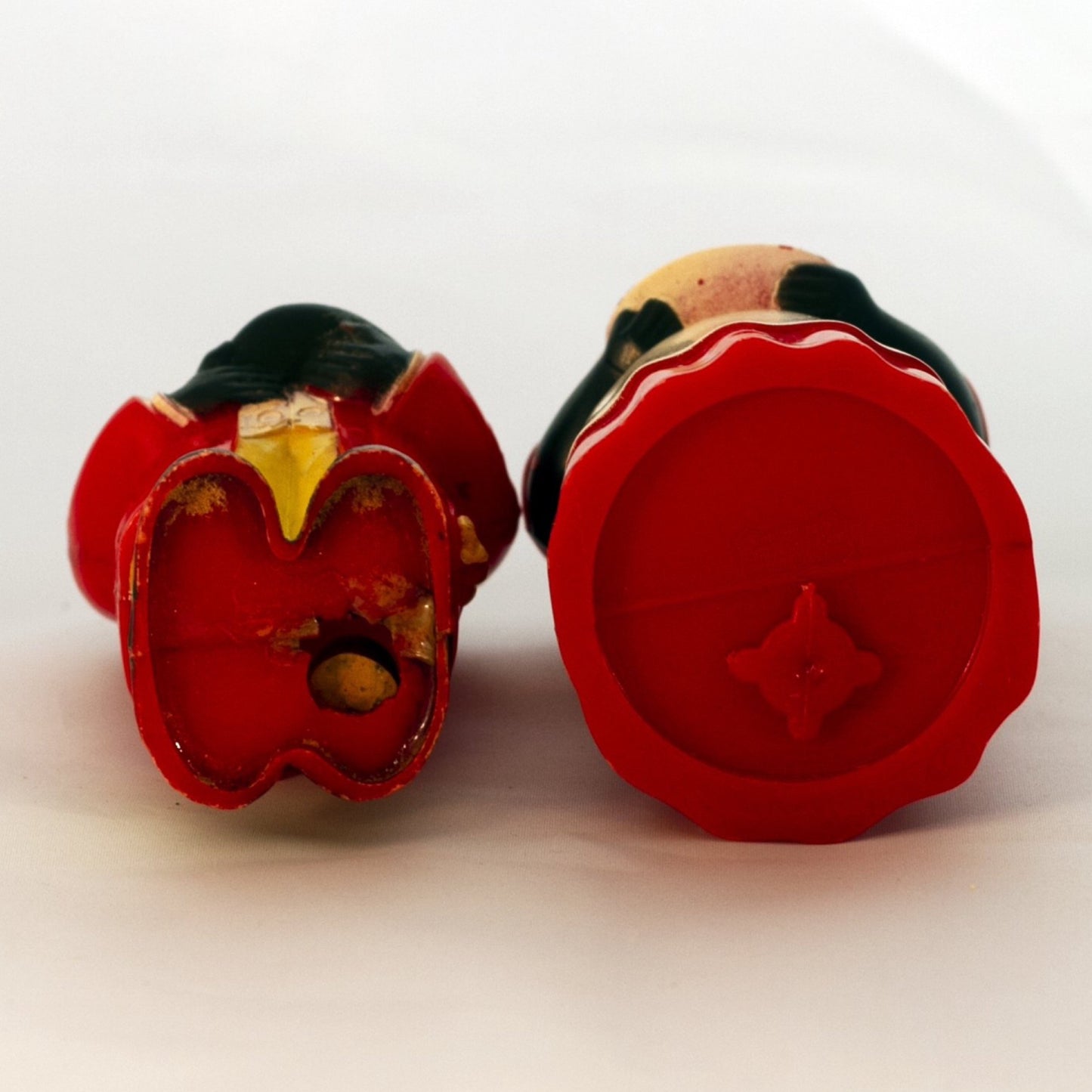
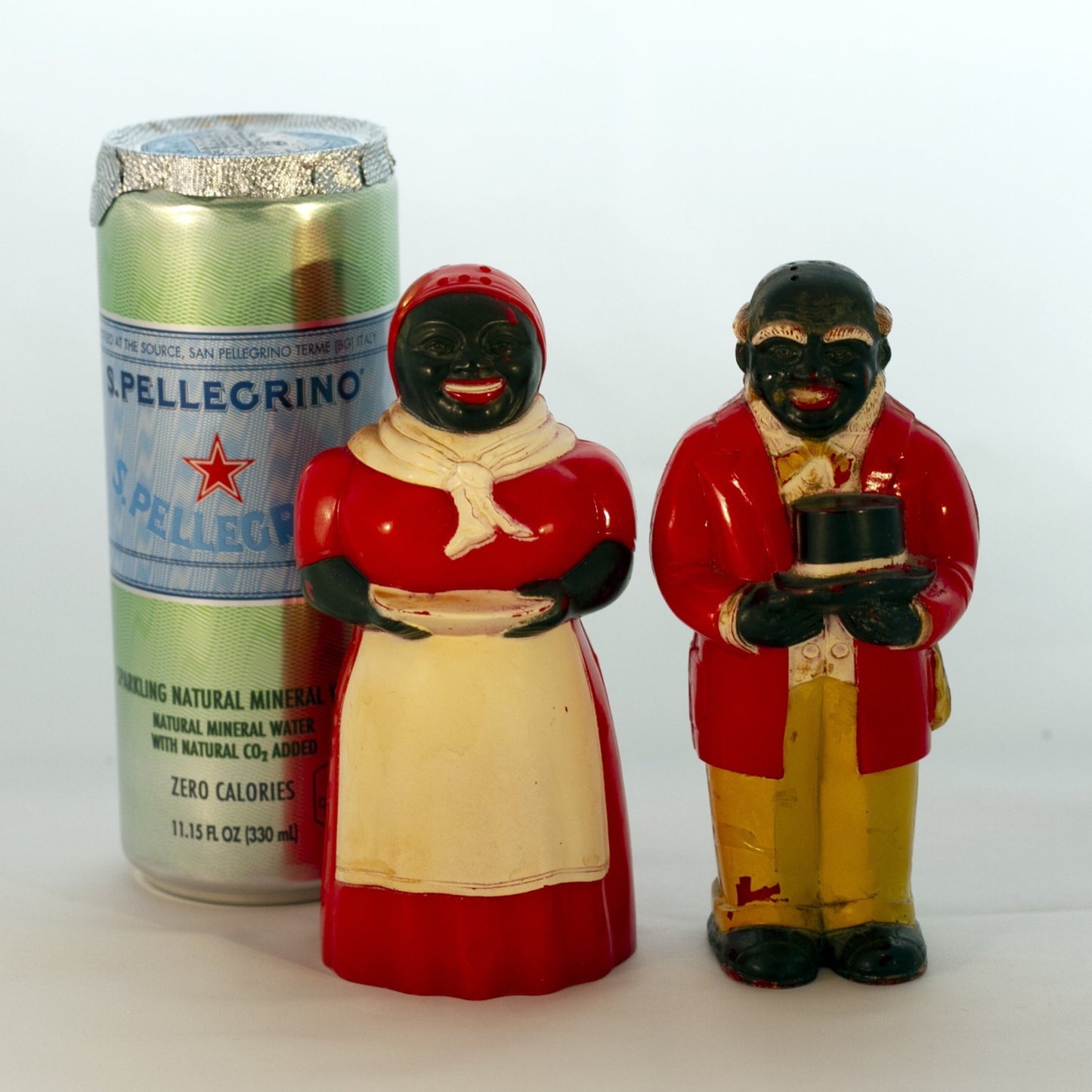
AUNT JEMINA & UNCLE MOSE SHAKERS, 5” high, were produced in the late 1940s by Fiedler & Fiedler (F & F) Mold and Die Works Company of Dayton, Ohio, as part of a promotional campaign with Quaker Oats. Crafted of molded hard red plastic with spray-painted details to formulate facial features, skin tones, and clothing, these shakers are complete with a green plastic stopper.
The Aunt Jemima shaker is dressed in a red dress and headscarf, with a white apron and neckerchief, while the Uncle Mose shaker holds a black top hat and is dressed in a red suit jacket, yellow slacks and bowtie. The Aunt Jemima is nearly perfect with most of her paint and still has her plastic stopper. The Uncle Mose has not faired as well with paint missing in a few places and no plastic stopper. The bottom of his shaker has some type of glue near the hole and there is a plastic smudge on the back of this tailcoat. The manufacturer mark and Made in the USA is embossed on each bottom.
Quaker Oats drew its inspiration for both characters from songs. Aunt Jemima drew inspiration from a jaunty vaudeville number, while the Uncle Mose representation is based on "Old Man Mose", penned by jazz musicians Louis Armstrong and Zilner Randolph in 1935. In June 2020, Quaker Oats announced the retirement of Aunt Jemima, citing the need to progress toward racial equality due to the brand's stereotypical image.
Historical Context & Content Notice
This item reflects imagery and themes that were produced during periods of racial inequality in the United States. Such objects often contain harmful stereotypes that are offensive today. They are presented here for historical documentation and educational purposes only, not as an endorsement of the views they depict.
Museums and scholars emphasize the importance of preserving and contextualizing this material to better understand the history of racism and its impact. This approach is informed by institutions such as the Jim Crow Museum at Ferris State University, which uses artifacts of intolerance to teach tolerance and promote social justice.
We ask that when making your purchasing decision that you consider the photos as part of the item's description.
We ask that when making your purchasing decision that you consider the photos as part of the item's description.
We do our best to provide you within the written description as much information, whether it’s the history, manufacturer, or condition, for each item we sell.
We also recognize that a “picture is worth a thousand words” and ask that you view the photos we provide closely. Often, a photo can be more effective than a written description when determining if an item will meet your needs and satisfaction.
If you need additional information on this or any item, please do not hesitate to reach out.
Share this listing.