The L.L. Cook Company
Villa Zorayda Hall of Justice St Augustine Florida Postcard L.L. Cook B1133 1930s Interior
Flat $2.00 USPS First Class shipping on all postcards.
Couldn't load pickup availability
AT A GLANCE
- Title:
- "Hall of Justice Villa Zorayda"
- Publisher:
- L.L. Cook Co.
- Type:
- Standard Size Postcard (3 ½” x 5 ½”)
- Subject:
- Museum interior, architectural furnishings
- Style:
- Documentary; interior photography
- Era:
- Interwar Period (1918 – 1941)
- Circa:
- Early 1930s
- Print type:
- Halftone (Photomechanical reproduction)
- Condition:
- Very Good (VG)
- Postcard:
- Photographic-Style
- Location:
- St. Augustine, Florida USA
- Postmark:
- Unposted | Unused
Low stock: 1 left
Atmospheric interior view of one of St. Augustine’s most unusual architectural landmarks.
Collector’s Note
📌 Postcards of Villa Zorayda interiors capture the exotic Moorish-inspired design that made the home a standout attraction in early Florida tourism and remain highly collectible among architecture and travel enthusiasts..
This black-and-white photographic-style printed postcard features the Hall of Justice inside Villa Zorayda in St. Augustine, Florida. Published by L.L. Cook Company of Milwaukee as part of their B-series (No. B-1133), the card presents a richly detailed interior filled with ornate furnishings, carved woodwork, textiles, and decorative screens inspired by Moorish and Spanish design traditions.
Villa Zorayda—also known as Zorayda Castle—was constructed in 1883 by Boston industrialist Franklin W. Smith as a winter residence. Later acquired by Abraham Mussallem, the home was preserved as a museum showcasing its original collection of art and antiques, many of which are visible in this interior scene.
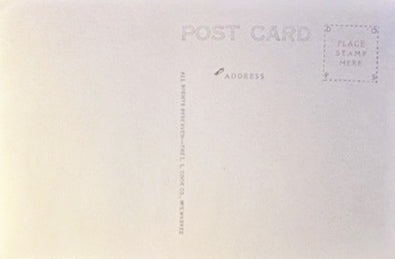
Printed on DOPS (DeVolite Peerless) postcard stock and featuring characteristic white-ink titling, the card dates to the early 1930s, aligning with L.L. Cook’s peak production period and B-series output.
A desirable piece for collectors of Florida ephemera, architectural history, and early American tourism.
Very good condition with light wear consistent with age. Typical tonal warmth from scanning; in hand, the image presents a more neutral photographic appearance. Ships in a protective postcard sleeve.
Share this listing.

Postcard Eras & Collecting Guide
-
Real Photo Postcards (c. 1890–1945)
Browse Real PostcardsEarly printed lithographs and Real Photo Postcards (RPPC) offer rich historical detail, documenting towns, events, family portraits, and everyday life. Disaster postcards depicting floods, fires, train wrecks, and other catastrophic events, were a popular way to share news as photographs could quickly be turned into postcards. Many RPPCs are scarce and unique due to their small‑batch production.
-
Pre-Linen Litho & Linen Postcards (c. 1907–1950)
Browse Pre-Linen Litho and Linen PostcardsPre‑Linen Litho cards (c. 1907–1929) were printed using smooth chromolithography and tinted halftone methods, producing soft, painterly views before the textured linen era. Linen postcards (c. 1930s–1950s) introduced high–rag‑content paper with a woven surface and bold saturated colors that reflected the optimism postwar travel culture. Together, these eras showcase the shift from early color printing.
-
Chrome Postcards (c.1939–)
Browse Chrome PostcardsChrome postcards, introduced in 1939, feature glossy surfaces, vivid color, and photographic imagery made possible by modern color film processes. The term “chrome” derives from Kodachrome, Eastman Kodak’s groundbreaking color film. Mid‑century examples depicting motels, highways, city skylines, national parks, and tourist destinations are collected for their documentation of postwar American travel and roadside culture.