Skip to product information
1 of 4

Antique & Vintage Toys

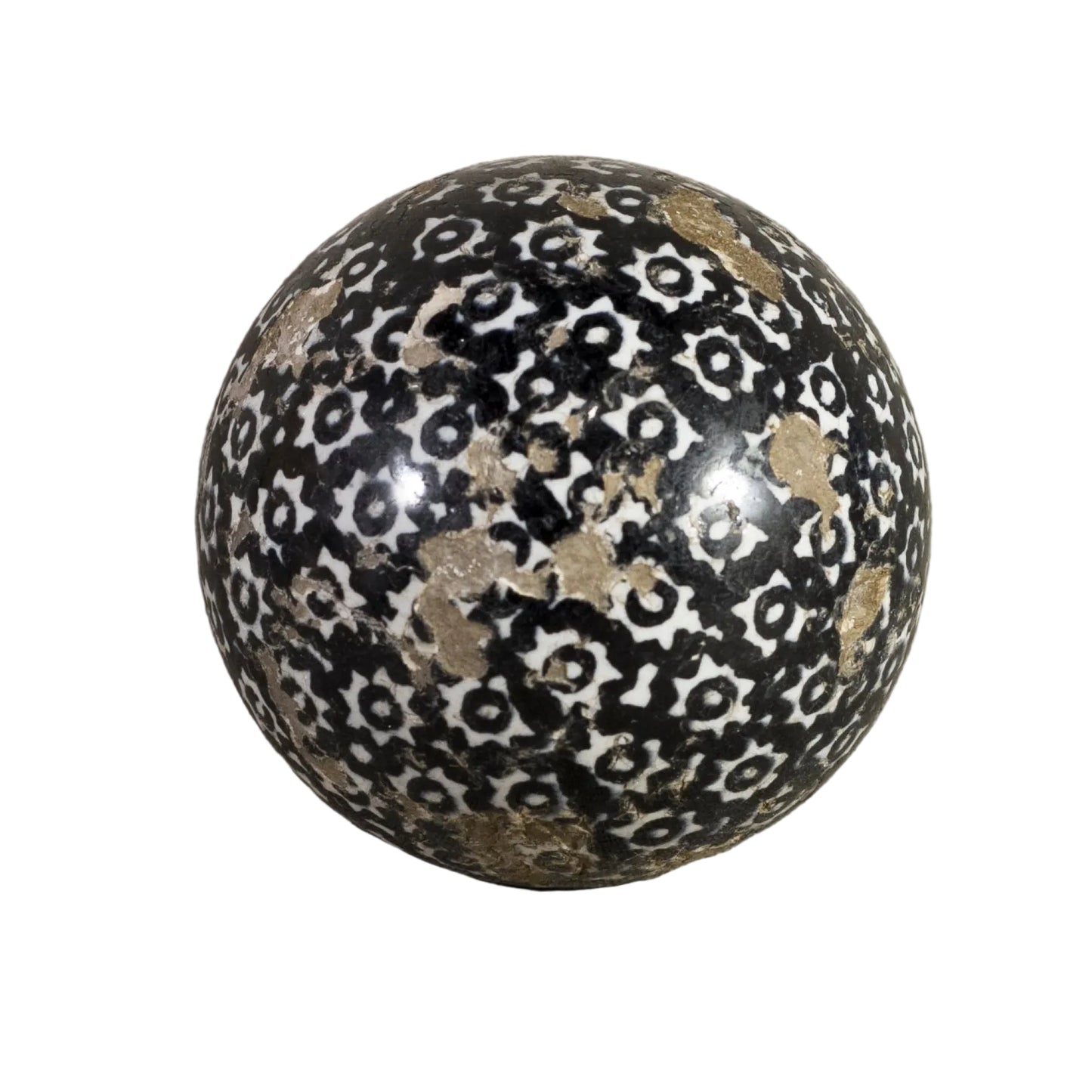
Antique Victorian Stoneware Carpet Ball – Black Stick Spatter Star, 3", c. 1860–1890

Antique Victorian Stoneware Carpet Ball – Black Stick Spatter Star, 3", c. 1860–1890

Regular price $110.00 USD
Regular price Sale price $110.00 USD
Sale Sold out
Shipping calculated at checkout.

Low stock: 1 left

Quantity

AT A GLANCE

Type:
Carpet Balls
Era:
Victorian & Gilded Age (1870 - 1900)
Circa:
1860 - 1890
Origin:
Scotland | England | United States
Material:
Stoneware
Dimensions:
3 inches diameter
Color:
Black, cream
Pattern:
Stick-spatter star
Decoration:
Hand-painted stars

Antique Victorian Stoneware Carpet Ball – Black Stick Spatter Star Design

A genuine 19th-century Victorian stoneware carpet ball, hand-decorated in a classic black and white stick spatter star pattern. Stick spatter star is one of the more desirable and less commonly found designs among early examples.

Carpet balls (also called carpet bowls or parlor bowls) were used in the indoor game of Parlour Bowl, a popular parlor pastime in Scotland, England, and later America during the mid-to-late 1800s. Each ball was individually thrown or “bowled” across carpeted floors toward a small target, similar to lawn bowling.

This example features traditional salt-glazed stoneware with painted crossbands and exhibits authentic age and use. The surface shows honest wear including chips, glaze loss, and small imperfections consistent with 19th-century play and handling, adding to its character and originality.

Today, antique carpet balls are highly sought after by collectors of primitive stoneware, early games, and Victorian decorative arts, and they display beautifully in bowls, cabinets, or shelves.

Measurements:
Approx. 3" diameter
Approx. 1 pound

Condition:
Well-played antique condition with chips, glaze loss, and surface wear typical of authentic period examples.

Collector’s Note: Early carpet balls were produced in Scotland and England before American potteries, including Jabez Vodrey and the Indiana Pottery Company, began manufacturing them in the mid-19th century. Surviving decorated examples with strong color and pattern remain increasingly scarce.

Just a quick heads‑up: the photos reveal details far better than text alone, so they’re worth a close review.

We share as much accurate information as possible about each item—from provenance to condition—but the images often show the nuances best. If you ever need more details, we’re always happy to help.

View full details