Skip to product information
1 of 3

Real Photo Postcard (RPPC)

Early Horseless Carriage RPPC c.1900 | Tiller-Steered Auto, Aurora IN Photographer

Early Horseless Carriage RPPC c.1900 | Tiller-Steered Auto, Aurora IN Photographer

Regular price $72.00 USD
Regular price Sale price $72.00 USD
Sale Sold out
Shipping calculated at checkout.

Flat $2.00 USPS First Class shipping on all postcards.


Quantity

AT A GLANCE

Type:
Standard Size Postcard (3 ½” x 5 ½”)
Subject:
Horseless carriage, early automobile
Style:
Early Automotive; Turn-of-the-Century
Era:
Turn of the Century (1890 - 1915)
Circa:
1900 - 1910
Print type:
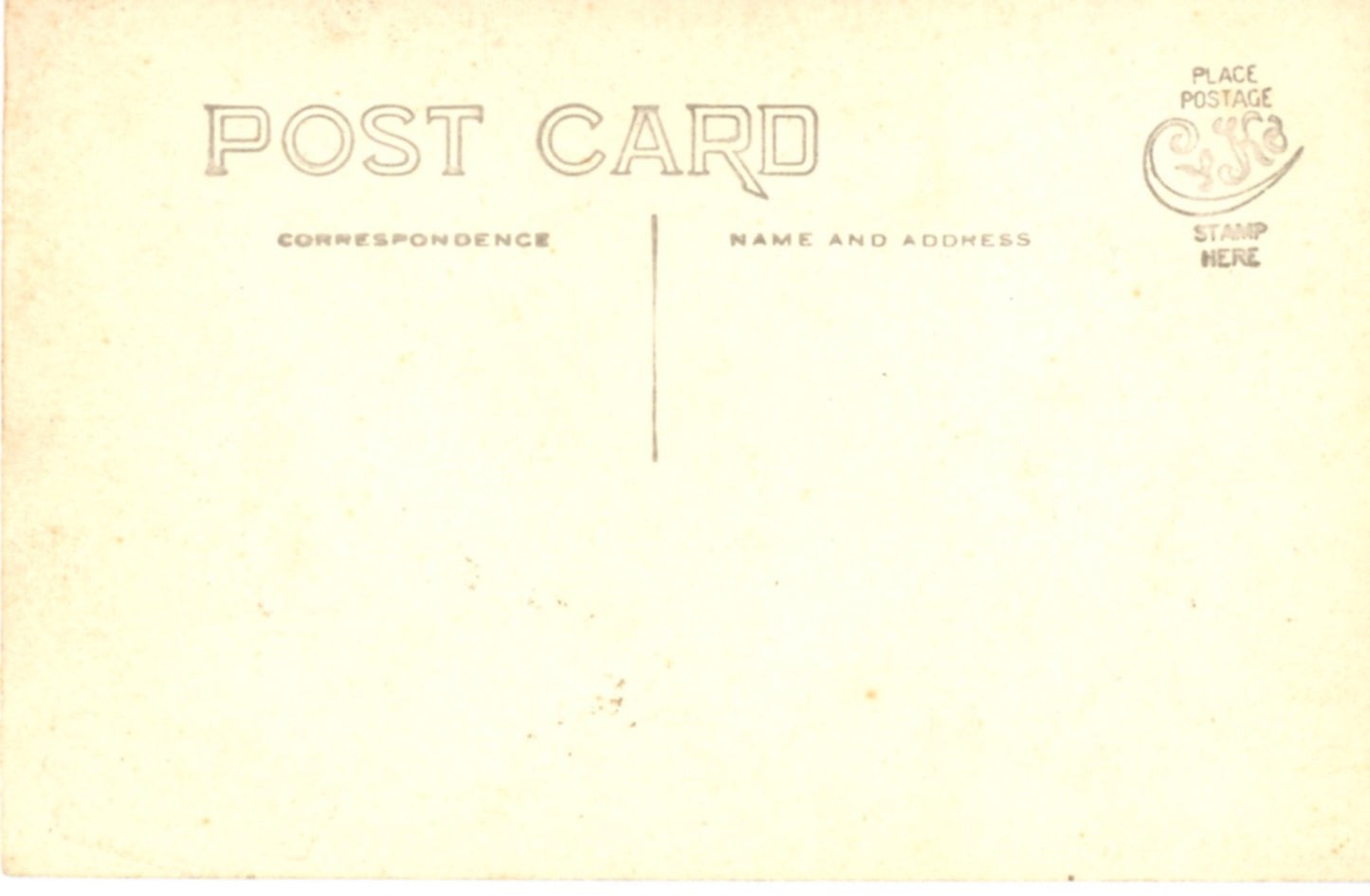
Silver gelatin real photo (CYKO paper)
Condition:
Very good-excellent (VG-EX)
Color:
Sepia-toned (black-and-white photograph)
Postcard:
Real Photo (RPPC) (1900 - 1945)
Photographer:
G. R. Hussung
Location:
Aurora, Indiana USA
Postmark:
Unposted | Unused
Notes:
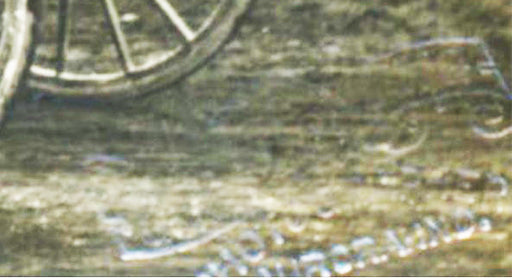
Embossed photographer mark; tiller steering; early automobile design

Low stock: 1 left

Circa 1900–1910 Real Photo Postcard (RPPC) featuring an early gas-powered horseless carriage with a seated couple, captured in a studio-quality outdoor photograph. The vehicle is steered by a tiller rather than a wheel—an early design feature most commonly associated with automobiles produced before the widespread adoption of steering wheels in the early 1900s.

Images of these transitional motor vehicles are scarce, documenting a brief but important period in the evolution from carriage to automobile. The formal pose of the driver and passenger, dressed in period attire, reflects the novelty and prestige of early motoring.

The postcard is printed on CYKO photographic paper, dating it between approximately 1904 and the 1920s, and features a subtle sepia tone typical of early silver gelatin prints. An embossed photographer’s mark appears in the lower right corner for G. R. Hussung, Aurora, Indiana, likely George Riley Hussung (1860–1933), an active regional photographer in the early 20th century.

Unposted and without caption, the image retains a strong documentary quality. A standout example for collectors of early automobiles, transportation history, and Indiana photography. Ships in a protective sleeve.

View full details
  • Real Photo Postcards (c. 1890–1945)

    Early printed lithographs and Real Photo Postcards (RPPC) offer rich historical detail, documenting towns, events, family portraits, and everyday life. Disaster postcards depicting floods, fires, train wrecks, and other catastrophic events, were a popular way to share news as photographs could quickly be turned into postcards. Many RPPCs are scarce and unique due to their small‑batch production.

    Browse Early Printed & Real Postcards 
  • Linen Era Postcards (c. 1930–1945)

    Linen postcards are known for their textured paper, bold color, and stylized depictions. Despite the name, linen postcards were not made of linen fabric, but on paper with a high rag content using high-saturation inks. They often depict city views, roadside attractions, motels, and tourist destinations. The exaggerated color, dramatic skies, and eye-catching compositions reflect the travel culture and optimism of the Depression-era and postwar years.

    Browse Linen Era Postcards 
  • Chrome Era Postcards (c.1939–)

    Chrome postcards, introduced in 1939, feature glossy surfaces, vivid color, and photographic imagery made possible by modern color film processes. The term “chrome” derives from Kodachrome, Eastman Kodak’s groundbreaking color film. Mid‑century examples depicting motels, highways, city skylines, national parks, and tourist destinations are collected for their documentation of postwar American travel and roadside culture.

    Browse Chrome Era Postcards