Real Photo Postcard (RPPC)
Antique RPPC Well-Dressed Young Man on Bench – CYKO Real Photo Postcard
Flat $2.00 USPS First Class shipping on all postcards within the continental USA.
Low stock: 1 left
Couldn't load pickup availability
AT A GLANCE
- Title:
- “Young Man Seated on Bench”
- Type:
- Standard Size Postcard (3 ½” x 5 ½”)
- Subject:
- Portrait, gentleman, fashion, outdoor setting
- Style:
- Portrait / documentary photography
- Era:
- Edwardian Era (1901–1914)
- Circa:
- 1910
- Print type:
- Silver gelatin real photo (CYKO paper)
- Condition:
- Very good-excellent (VG-EX)
- Color:
- Black & white
- Postcard:
- Real Photo (RPPC)
- Postmark:
- Unposted | Unused
- Notes:
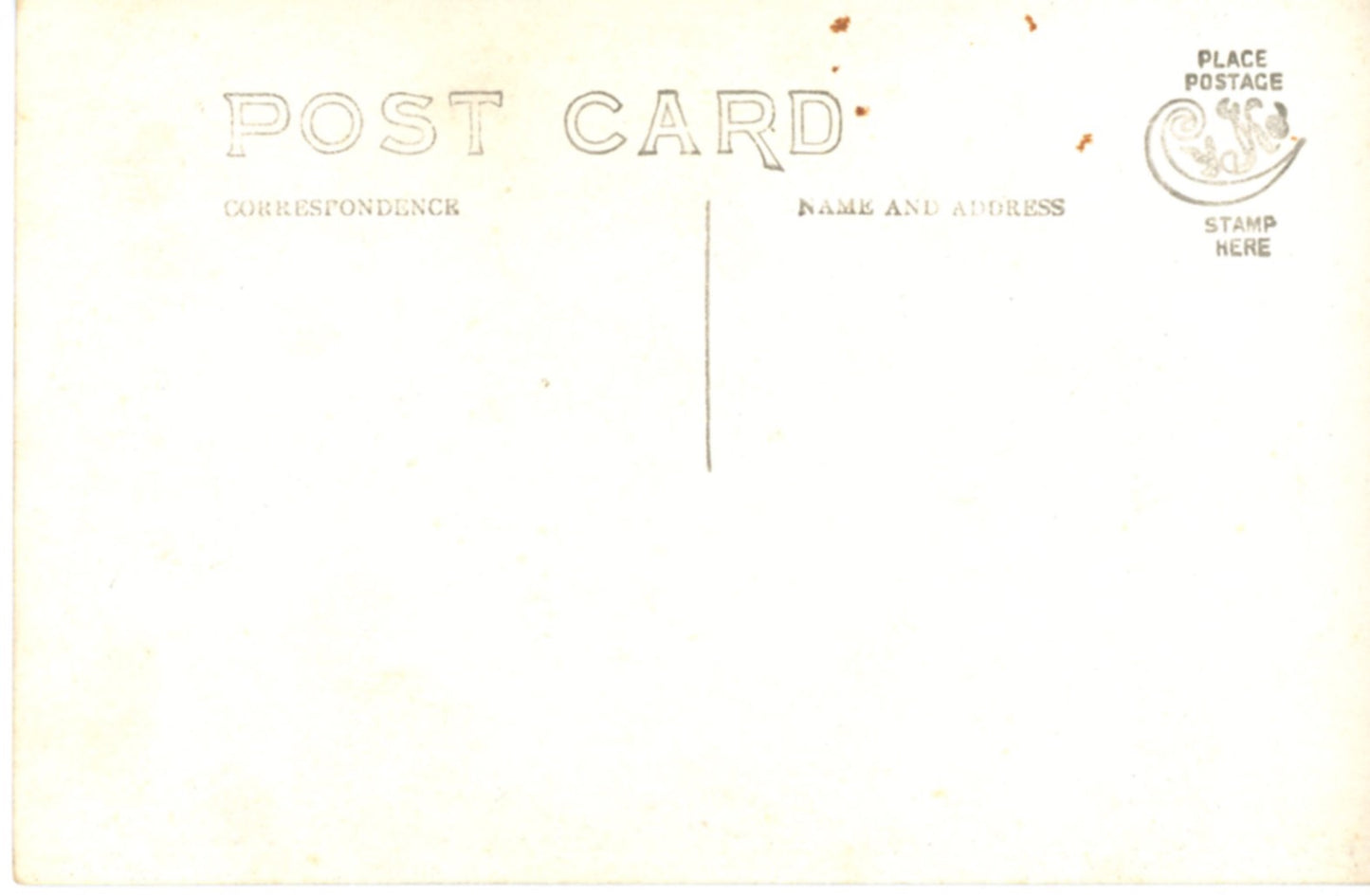
- CYKO stamp box
Early 20th Century RPPC — Fashionably Dressed Young Man, CYKO Paper Portrait Study
An early 20th-century real photo postcard (RPPC) featuring a fashionably dressed young man seated on a wooden bench, posed outdoors beneath a leafy tree canopy.
The subject wears a dark tailored suit, stiff white collar, and Panama-style hat, reflecting the refined, transitional style of the Edwardian period into the 1910s. His relaxed but composed posture—seated with legs crossed and hands folded—suggests a deliberate portrait, likely created for personal distribution or keepsake.
Collector’s Note
Studio-style real photo postcards like this capture more than a likeness—they preserve fashion, posture, and personality from a moment in time. Produced on photographic paper in the early 1900s, this portrait reflects the era’s formal dress and the growing popularity of postcards as personal keepsakes and informal portrait cards.
Printed on CYKO photographic paper, identifiable by the stamp box on the reverse, the postcard dates to approximately 1906–1915. Like many real photo postcards of the period, the image does not fully extend to the edges, leaving a natural margin around the photograph.
Uncaptioned and unposted, the card invites interpretation—whether as a personal portrait, a studio-style outdoor sitting, or simply a striking example of early photographic portraiture.
Just a quick heads‑up: the photos reveal details far better than text alone, so they’re worth a close review.
We share as much accurate information as possible about each item—from provenance to condition—but the images often show the nuances best. If you ever need more details, we’re always happy to help.
Share this listing.

Postcard Eras & Collecting Guide
-
Real Photo Postcards (c. 1890–1945)
Browse Real PostcardsEarly printed lithographs and Real Photo Postcards (RPPC) offer rich historical detail, documenting towns, events, family portraits, and everyday life. Disaster postcards depicting floods, fires, train wrecks, and other catastrophic events, were a popular way to share news as photographs could quickly be turned into postcards. Many RPPCs are scarce and unique due to their small‑batch production.
-
Pre-Linen Litho & Linen Postcards (c. 1907–1950)
Browse Pre-Linen Litho and Linen PostcardsPre‑Linen Litho cards (c. 1907–1929) were printed using smooth chromolithography and tinted halftone methods, producing soft, painterly views before the textured linen era. Linen postcards (c. 1930s–1950s) introduced high–rag‑content paper with a woven surface and bold saturated colors that reflected the optimism postwar travel culture. Together, these eras showcase the shift from early color printing.
-
Chrome Postcards (c.1939–)
Browse Chrome PostcardsChrome postcards, introduced in 1939, feature glossy surfaces, vivid color, and photographic imagery made possible by modern color film processes. The term “chrome” derives from Kodachrome, Eastman Kodak’s groundbreaking color film. Mid‑century examples depicting motels, highways, city skylines, national parks, and tourist destinations are collected for their documentation of postwar American travel and roadside culture.