


Real Photo Postcard (RPPC)
1923 RPPC Phi Kappa Psi Fraternity House – Dickinson College Carlisle PA | Real Photo Postcard
1923 RPPC Phi Kappa Psi Fraternity House – Dickinson College Carlisle PA | Real Photo Postcard
Flat $2.00 USPS First Class shipping on all postcards within the continental USA.
Flat $2.00 USPS First Class shipping on all postcards within the continental USA.
Low stock: 1 left
Couldn't load pickup availability
AT A GLANCE
- Title:
- "Phi Kappa Psi Fraternity House – Dickinson College"
- Type:
- Standard Size Postcard (3 ½” x 5 ½”)
- Subject:
- Fraternity house, college campus, student life
- Style:
- Documentary photography
- Era:
- Early 20th Century (1900 - 1945)
- Circa:
- 1923 (postmarked)
- Print type:
- Silver gelatin real photo
- Condition:
- Very good-excellent (VG-EX)
- Color:
- Black & white
- Postcard:
- Real Photo (RPPC)
- Location:
- Carlisle, Pennsylvania
- Postmark:
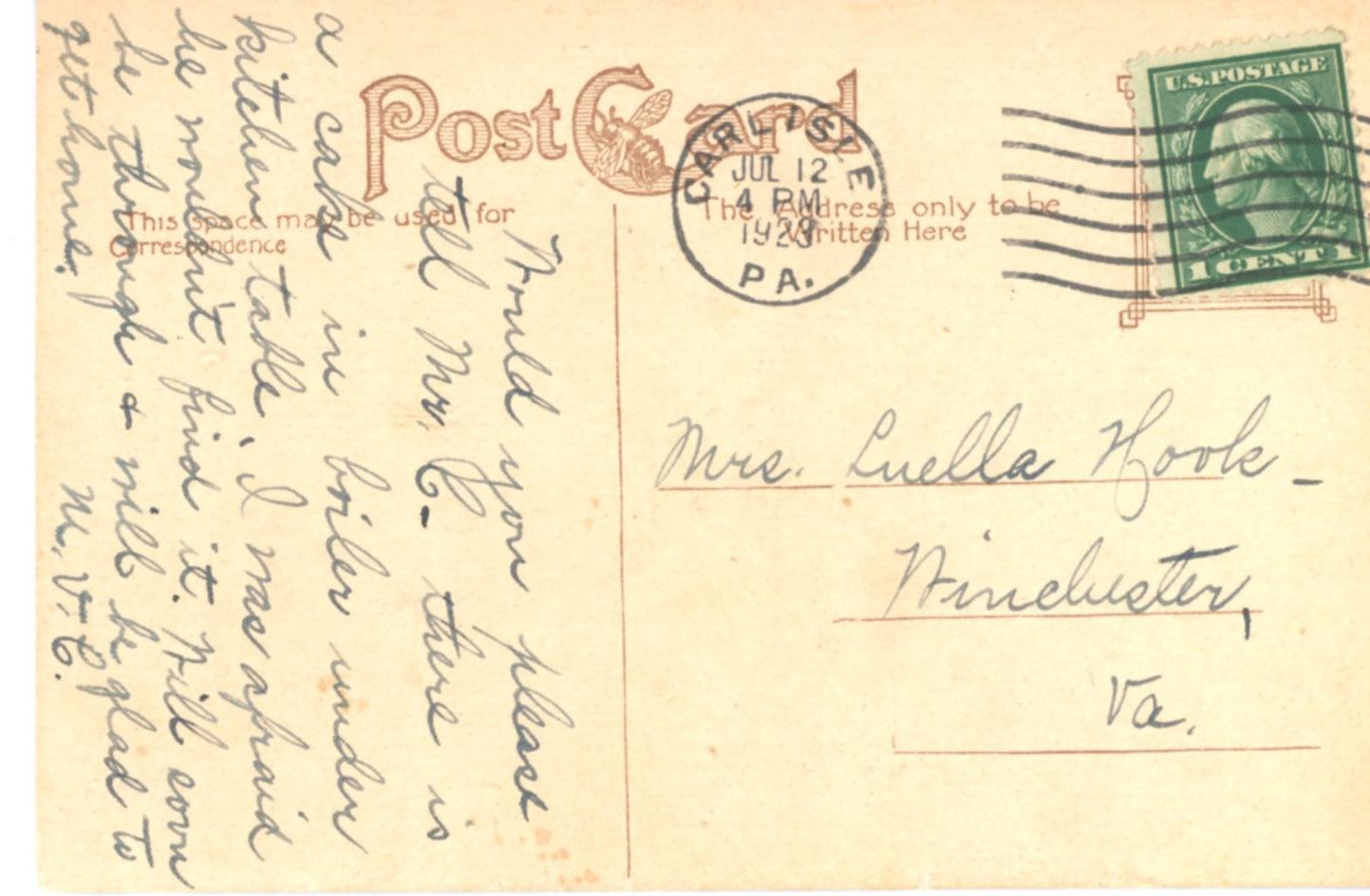
- Postally Used | Stamped | Message
- Notes:
- 1¢ Washington green stamp; handwritten message; code #18556 printed on front
1923 Dickinson College RPPC — Phi Kappa Psi Fraternity House, Carlisle, Pennsylvania
A 1923 real photo postcard (RPPC) featuring the Phi Kappa Psi Fraternity House at Dickinson College in Carlisle, Pennsylvania. The image shows the stately brick residence set among mature trees, with students gathered on the lawn—an evocative snapshot of early 20th-century campus life.
Founded in 1783, Dickinson College holds the distinction of being one of the first colleges established in the newly independent United States, adding historical weight to campus-related material from this period.
Collector’s Note
Early real photo postcards of American college campuses offer a rare, unfiltered look at student life in the decades before widespread commercial printing. This 1923 example—postmarked and message-bearing—captures the Phi Kappa Psi fraternity house at Dickinson College during a formative period in both the institution and the fraternity’s history. The handwritten correspondence adds a human dimension, preserving a moment of everyday communication from a time when postcards functioned much like quick messages or calls do today.
This example is postally used, bearing a July 12, 1923 Carlisle, PA cancellation and a 1¢ George Washington green stamp. The interesting handwritten message, sent from “Mrs. V.C.” to “Mrs. Luella Hook” asking the receiver to deliver a message to her husband that a cake is hidden in a boiler — reflects the era when postcards served as quick, informal communication, conveying daily updates in just a few lines.

The photograph itself is a true silver gelatin print, not a printed reproduction, giving it the tonal depth and clarity collectors expect from authentic RPPCs. With its balanced composition, shaded lawn, and classic collegiate architecture, this piece frames beautifully — ideal for studies, libraries, or alumni displays. The combination of image and handwritten reverse also makes it especially compelling for double-sided or archival-style presentation.
Historical Note
Phi Kappa Psi, founded in 1852, established chapters across prominent American colleges during the 19th and early 20th centuries. Fraternity houses like this one were central to student social life, often serving as both residence and gathering place. Real photo postcards documenting these spaces are increasingly collected for their connection to institutional history and early campus culture.
Just a quick heads‑up: the photos reveal details far better than text alone, so they’re worth a close review.
Just a quick heads‑up: the photos reveal details far better than text alone, so they’re worth a close review.
We share as much accurate information as possible about each item—from provenance to condition—but the images often show the nuances best. If you ever need more details, we’re always happy to help.

Postcard Eras & Collecting Guide
-

Real Photo Postcards (c. 1890–1945)
Browse Real PostcardsEarly printed lithographs and Real Photo Postcards (RPPC) offer rich historical detail, documenting towns, events, family portraits, and everyday life. Disaster postcards depicting floods, fires, train wrecks, and other catastrophic events, were a popular way to share news as photographs could quickly be turned into postcards. Many RPPCs are scarce and unique due to their small‑batch production.
-

Pre-Linen Litho & Linen Postcards (c. 1907–1950)
Browse Pre-Linen Litho and Linen PostcardsPre‑Linen Litho cards (c. 1907–1929) were printed using smooth chromolithography and tinted halftone methods, producing soft, painterly views before the textured linen era. Linen postcards (c. 1930s–1950s) introduced high–rag‑content paper with a woven surface and bold saturated colors that reflected the optimism postwar travel culture. Together, these eras showcase the shift from early color printing.
-

Chrome Postcards (c.1939–)
Browse Chrome PostcardsChrome postcards, introduced in 1939, feature glossy surfaces, vivid color, and photographic imagery made possible by modern color film processes. The term “chrome” derives from Kodachrome, Eastman Kodak’s groundbreaking color film. Mid‑century examples depicting motels, highways, city skylines, national parks, and tourist destinations are collected for their documentation of postwar American travel and roadside culture.


