Skip to product information
1 of 4

Toronto Symphony Women's Committee

The Toronto Symphony Cookbook – First Printing (1980)

The Toronto Symphony Cookbook – First Printing (1980)

Regular price $20.00 USD
Regular price Sale price $20.00 USD
Sale Sold out
Shipping calculated at checkout.

Low stock: 1 left

Quantity

AT A GLANCE

Title:
"The Toronto Symphony Cookbook"
Publisher:
The Toronto Symphony Women's Committee
Type:
Cookbook
Style:
Community & Fundraising Cookbooks
Artist:
Audrey Pratt, Illustrator
Author:
Ruth Koretsky, Editor
Era:
Late 20th Century (1970–1999)
Date:
1980 (First Printing)
Origin:
Toronto, Ontario
Dimensions:
9" x 6" (landscape)
Condition:
Very Good (VG)
Location:
Toronto, Ontario Canada
Cover:
Softcover wire-bound
Pages:
197 (150+ recipes)
ISBN:
9780969044703
Book genre:
Community & Junior League
Notes:
Includes musician biographies and international dishes

The Toronto Symphony Cookbook is a beautifully produced first printing (1980) compiled and edited by Ruth Koretsky for the Toronto Symphony Women’s Committee, with charming illustrations by Audrey Pratt. This 197‑page, wire‑bound landscape cookbook brings together more than 150 recipes contributed by symphony musicians, guest artists, and friends of the orchestra, creating a uniquely personal and culturally rich culinary collection.

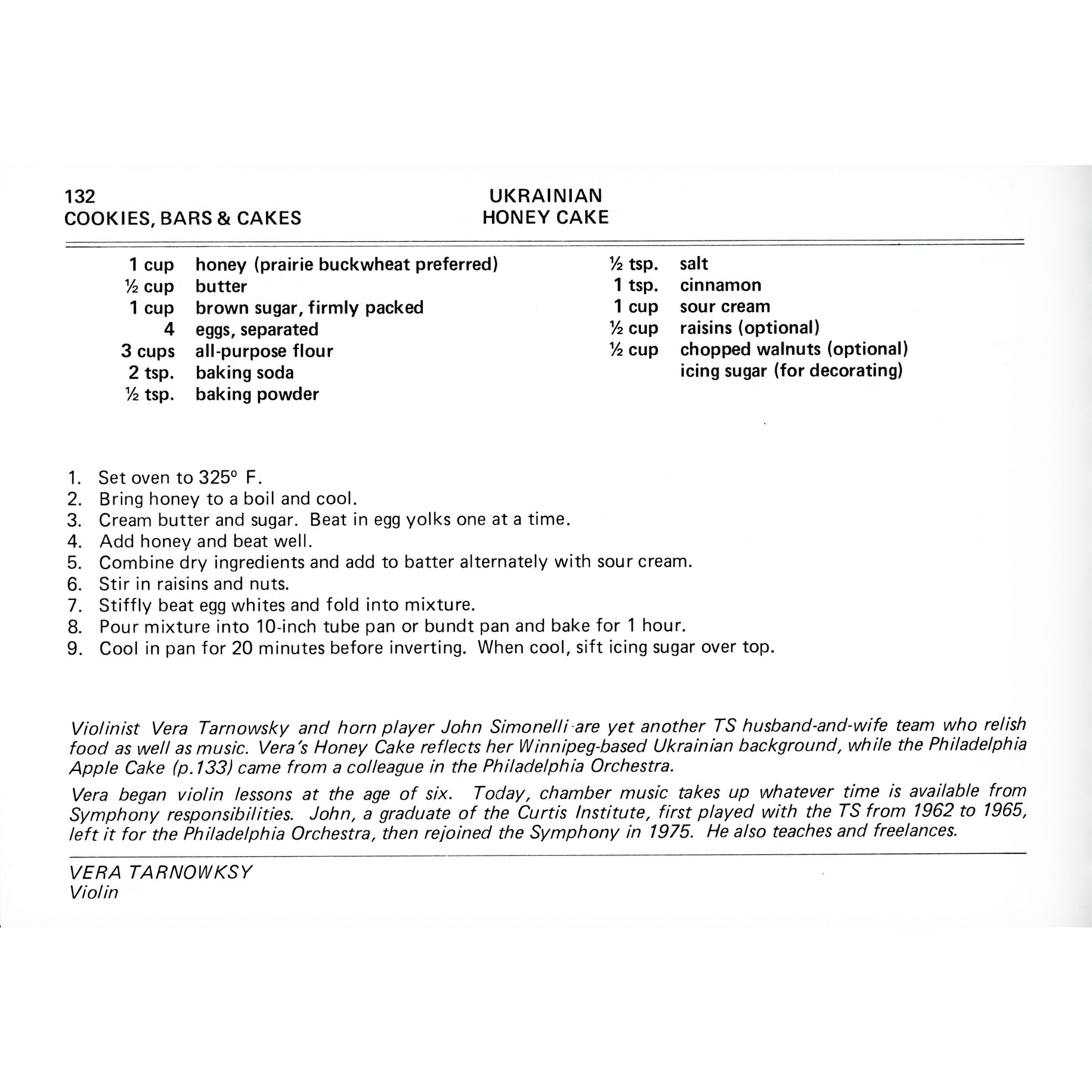
Each recipe is paired with the contributor’s name, instrument or role, and often a short biographical note, offering a rare glimpse into the backgrounds and personal histories of Toronto Symphony members. The result is a cosmopolitan anthology of whole‑food, upscale, and heritage‑driven dishes that reflect the global character of the orchestra.

Many recipes draw directly from the contributors’ homelands — including Israeli Style Tachema à la Daniel from Principal Violoncello Daniel Domb, Delta Seafood Gumbo from contralto Maureen Forrester, Conch Chowder from Associate Principal Oboe Richard Dorsey, Chicken Paprikas with Hungarian Dumplings from cellist George Horvath, and Royal Shortbread (originating from Buckingham Palace) submitted by violinist Jan Whyte.

Others highlight family traditions or musician‑favorite comfort foods, such as Joe’s Homemade Pasta (Joseph Umbrico, Principal Trumpet) and Strawberry Sonata (Murray Ginsberg, Trombone).

Together, these recipes form a vivid portrait of the orchestra at a moment in time — a blend of culinary heritage, musical biography, and community storytelling. This copy is in excellent condition, with clean pages, strong binding, and minimal shelf wear. A standout piece for collectors of music ephemera, Canadian cultural history, and international recipe collections.

Browse our complete Community & Junior League Cookbooks collection for more fundraising cookbooks and recipes.

Just a quick heads‑up: the photos reveal details far better than text alone, so they’re worth a close review.

We share as much accurate information as possible about each item—from provenance to condition—but the images often show the nuances best. If you ever need more details, we’re always happy to help.

View full details

The Legacy of Community Cookbooks

Community cookbooks are valued for their historical significance, their role in fundraising, and their ability to preserve culinary traditions. Often passed down through families with handwritten notes on time-worn pages, they reveal an intimate look into American culture and social norms—particularly the role of women.

Naming conventions like "Mrs. John A. Smith" reflect the hierarchy and identity of women during an era of limited societal power; while the recipes reflect food trends, kitchen technologies, and patterns of cultural assimilation. These cookbooks trace the larger story of America as it was reshaped by immigration, urban growth, and industrial change.

The tradition began during the Civil War with Maria J. Moss's, A Poetical Cookbook (1864), which raised funds for soldiers' families. Junior League organizations are major publishers, first publishing The Junior League Recipe Book (1930). Many have maintained popularity through the generations—like Charleston Receipts (1950), the oldest community cookbook that is still in print today.