Skip to product information
1 of 4

Keller & Guérin (K & G Lunéville)

Antique French Faïence Apricot Plate by K & G Lunéville (8½”) — Signed Obert, c. 1900

Antique French Faïence Apricot Plate by K & G Lunéville (8½”) — Signed Obert, c. 1900

Select your desired plate using options below:
Regular price $55.00 USD
Regular price Sale price $55.00 USD
Sale Sold out
Shipping calculated at checkout.

Low stock: 1 left

Quantity

AT A GLANCE

Type:
Decorative plate
Style:
French Country | Provincial French | Hand-Painted Faïence
Signature:
Obert (Signed on front)
Era:
Art Nouveau (1896 - 1914)
Circa:
1900
Origin:
Lunéville, Lorraine, France
Maker:
Keller & Guérin
Material:
Tin-glazed earthenware (faïence)
Dimensions:
8 ½" diameter
Condition:
See variant descriptions
Mounting:
Rear holes for hanging
Decoration:
Hand-painted apricots
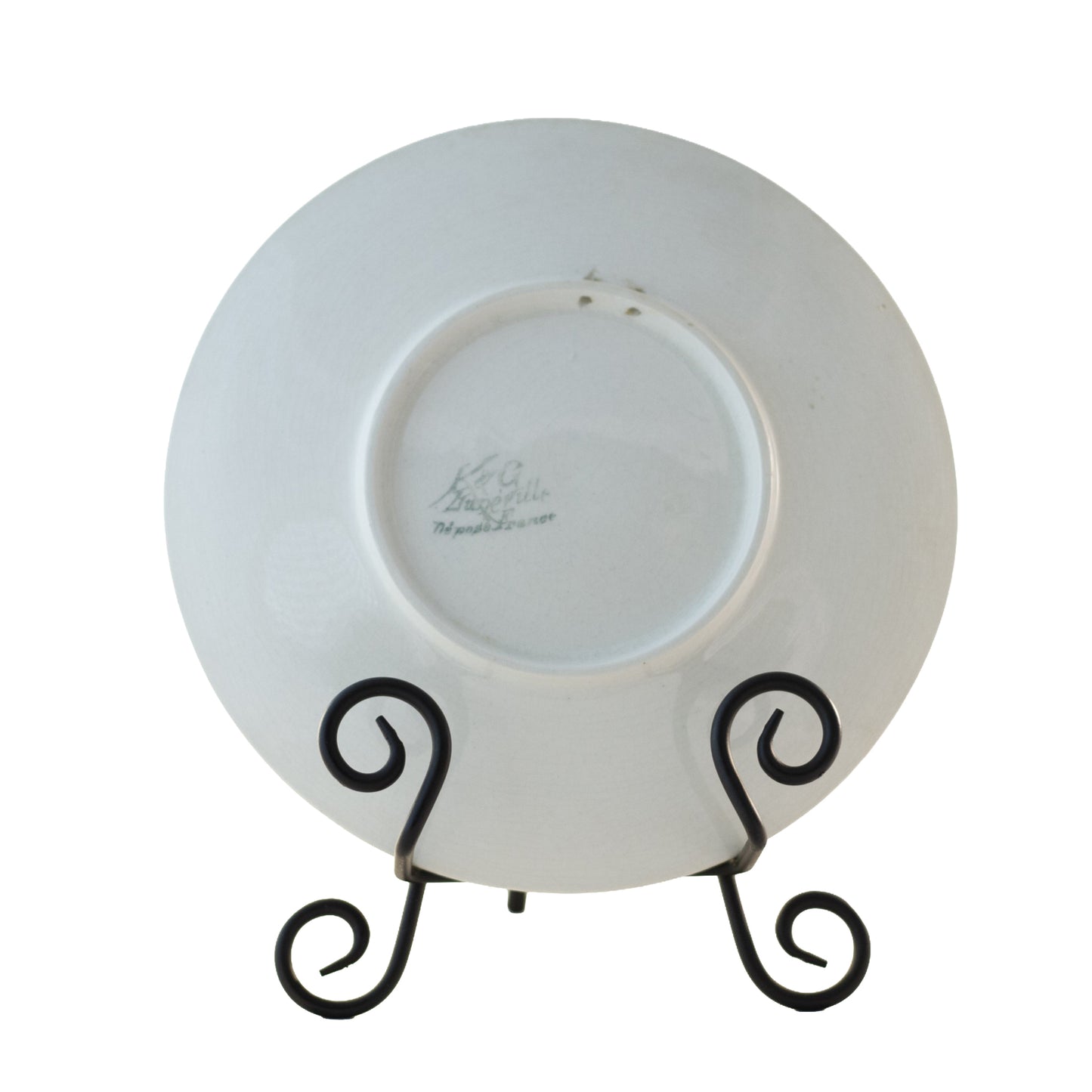
Maker’s mark:
K & G Lunéville France

Keller & Guérin Lunéville Antique French Faïence Apricot Plate Signed Obert

Collector’s Note

Keller & Guérin (K&G Lunéville) fruit plates are prized for their vibrant hand-painted decoration and naturalistic fruit motifs. Artist-signed examples—such as those bearing the Obert signature—are especially sought after, reflecting the individuality of the decorator and the artistry of late 19th- and early 20th-century French faïence production.

Collectors are drawn to plates with strong color saturation, finely detailed brushwork, and balanced composition. Subtle background tones, gentle glaze variation, and light signs of age are typical and contribute to the authenticity and enduring charm.

Delicately hand-painted and rich with color, these antique French faïence apricot plates were produced by Keller & Guérin (K & G Lunéville), one of the most celebrated faience makers of the late 19th century.

Dating to circa 1900, each 8 ½" diameter plate features softly shaded apricots rendered in the naturalistic style that made Lunéville fruitware so collectible during the Art Nouveau era. The painterly gradients, matte-to-gloss glaze transitions, and gentle craquelure are hallmarks of authentic French faïence from this period.

Offered individually, both plates are signed “Obert." 

Yellow Apricots on Green

  • Beautifully preserved with no cracks or chips; only gentle light crazing on the back, a natural signature of its age and authentic tin-glazed character.

Orange Apricots on Green

  • Equally well-preserved with no cracks or chips; light crazing primarily on the back—charming evidence of handcrafted origins from the kiln.

Decorating Appeal

Equally suited for display or use, Lunéville fruit plates bring a fresh, colorful elegance to the home. Their painterly fruit motifs and softly blended backgrounds make them ideal for open shelving, hutches, or wall arrangements, where each plate can be appreciated as an individual work of art.

Grouped together or mixed with ironstone and other French faïence, they add warmth and a collected, European feel—perfect for farmhouse, French country, and provincial-inspired interiors.

These plates retain their original K & G Lunéville France backstamp and feature two discreet rear hanging holes for easy wall mounting—ideal for a cohesive Lunéville fruit plate grouping. While beautifully preserved overall, each plate shows minor signs of age and authentic tin-glazed character that add to their charm.

Historical Note

Lunéville faïence is among the most celebrated French ceramics. In 1730, Jacques Chambrette established the factory in Luneville, Lorraine. His innovations—including the development of terre de Lorraine earthenware—helped define the region’s distinctive ceramic identity.

Sébastien Keller acquired the factory in 1785. Around 1832, the firm became known as Keller & Guérin producing both utilitarian wares and finely decorated faïence. By the late 19th and early 20th centuries, Lunéville was widely recognized for its hand-painted designs, including richly colored fruit and floral motifs that remain highly collectible today. Factory production declined following World War II, and Lunéville ultimately ceased production in 1981.

Explore our full French Faïence collection to mix and match timeless antique and vintage tin-glazed earthenware from notable French centers including Lunéville, Quimper, and Strasbourg.

Just a quick heads‑up: the photos reveal details far better than text alone, so they’re worth a close review.

We share as much accurate information as possible about each item—from provenance to condition—but the images often show the nuances best. If you ever need more details, we’re always happy to help.

View full details