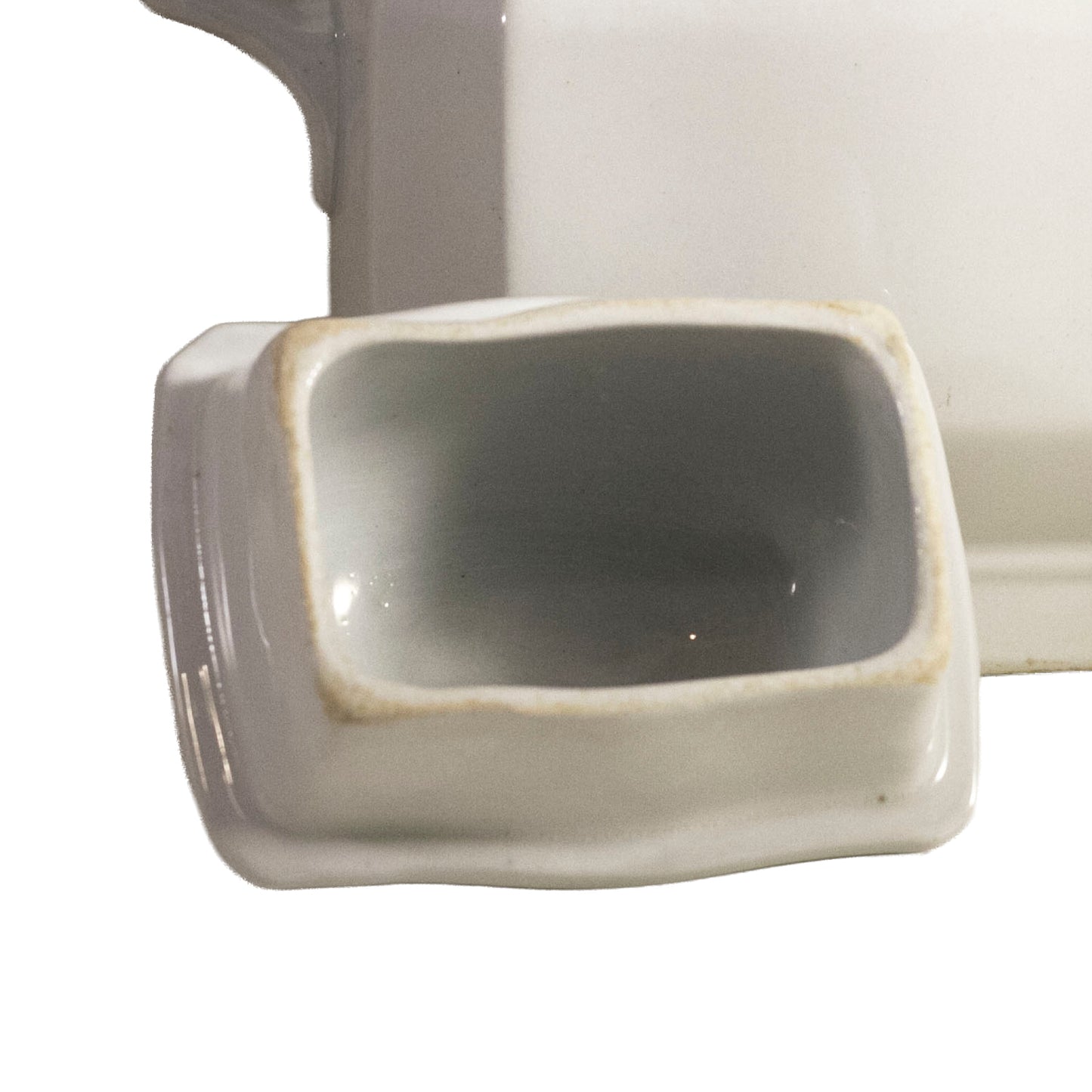
Classic Block Optic Ironstone Teapot – Sculptural Form in Late Victorian English Tableware
Collector’s Note
J & G Meakin’s Classic Block Optic pattern is prized among collectors for its distinctive geometric form—often described as “mitered” or paneled—which reflects the late Victorian shift toward structured, architectural design in tableware. Produced in Staffordshire during the height of England’s ironstone industry, Block Optic pieces are especially desirable, as they showcase the form at its most dynamic while remaining highly functional and display-worthy.
A striking example of late 19th-century English ironstone, this Classic Block Optic teapot by J & G Meakin embodies the balance of utility and design that defines Victorian tableware.
The faceted, paneled body—often referred to as “mitered block”—creates a crisp, architectural silhouette, while the gently curved spout and angular handle provide contrast and visual movement. The domed lid is finished with a distinctive ring finial, accented on either side with a subtle starburst motif, adding a refined decorative touch.
Decorating Appeal
White ironstone teapots like this one bring structure and quiet elegance to a space. Displayed on open shelving, a kitchen counter, or within a hutch, their sculptural forms add depth without overwhelming a palette. The crisp white glaze pairs beautifully with wood tones, linens, and transferware, making it a natural fit for farmhouse, English country, and minimalist traditional interiors.
Rendered in classic white ironstone, the piece carries the clean, luminous quality that made ironstone a staple of both everyday use and formal dining. Its substantial form and sculptural lines make it equally compelling as a display piece.
Stamped on the underside with an early J & G Meakin mark featuring the Royal Arms and “Hanley, England,” this teapot dates to circa 1890, during a period when the firm was producing some of its most enduring designs.
Dimensions: 9¼″ H (with lid), 8¾″ H (without lid), 9″ handle to spout, 5½″ W body
Historical Note
J & G Meakin was one of Staffordshire’s leading 19th-century pottery firms, founded in 1851 by brothers James and George Meakin, sons of master potter James Meakin of Hanley, England. The company specialized in producing durable, affordable white earthenware—often referred to as “granite” or ironstone—designed to meet growing domestic and export demand.
Following the American Civil War, J & G Meakin became a dominant force in the U.S. market, helping popularize ironstone as a practical yet refined alternative to porcelain. Patterns such as Classic Block Optic—also known as “Mitered Block” for its squared, paneled form—reflect the firm’s emphasis on strength, simplicity, and distinctive design.
The Meakin family’s influence extended well beyond their own factory, with descendants and relatives going on to establish other major Staffordshire potteries, including Johnson Brothers.
Browse our Antique Ironstone collection for additional pieces of ironstone, including pitchers, tureens and covered dishes, plates, platters, compotes and much more.