Skip to product information
1 of 4

Handcrafted

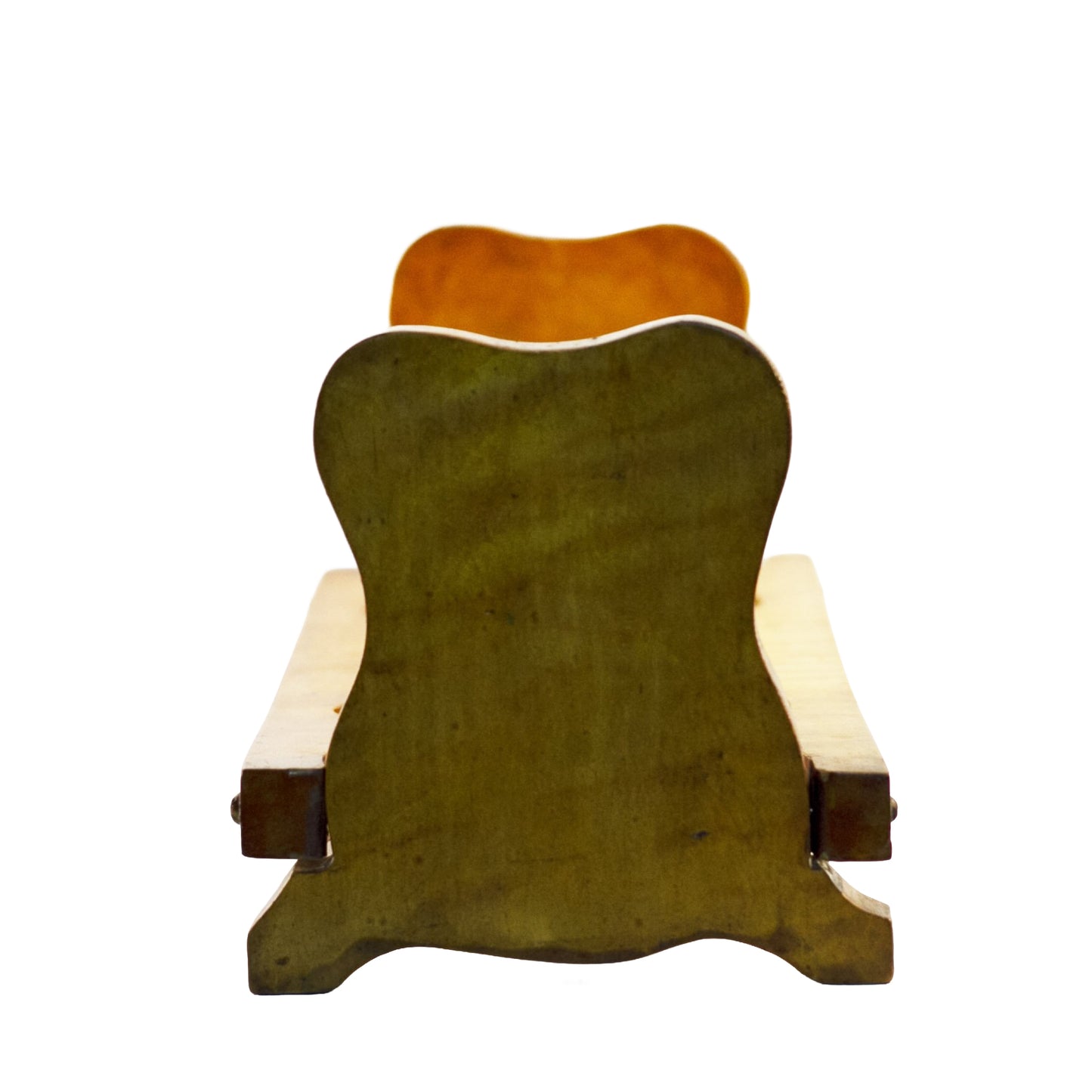
Antique Tiger Maple Collapsible Desktop Bookshelf | Cookbook Stand | Circa 1890–1915

Antique Tiger Maple Collapsible Desktop Bookshelf | Cookbook Stand | Circa 1890–1915

Regular price $74.00 USD
Regular price Sale price $74.00 USD
Sale Sold out
Shipping calculated at checkout.

Low stock: 1 left

Quantity

AT A GLANCE

Title:
Antique Tiger Maple Collapsible Desktop Bookshelf
Era:
Late 19th Early 20th Century (1880 - 1930)
Circa:
1890 - 1915
Origin:
United States
Material:
Tiger maple (flame maple)
Dimensions:
5 ¾"by 17"
Condition:
Very Good (VG)
Notes:
Collapsible bookshelf with hinged sides

Warm Tiger Maple Glow in a Charming Collapsible Bookshelf or Cookbook Holder.

Richly figured tiger maple gives this antique collapsible bookshelf its warmth and character. The undulating flame grain catches the light beautifully, making even a simple stack of books feel curated and intentional.

Designed with hinged side supports, the shelf folds flat when not in use — a practical feature typical of late 19th and early 20th century desktop accessories. Its compact footprint makes it ideal for organizing cookbooks in the kitchen, holding journals or ledgers on a desk, or displaying favorite volumes in a study.

The shaped ends and softly worn finish speak to careful hand craftsmanship. The wood has developed a mellow honey tone over time, highlighting the dramatic tiger stripe figuring that maple lovers prize.

The shelf stands 5 ¾″ tall, measures approximately 17″ wide and 5 ½″ deep and remains sturdy and functional. It is in good antique condition with expected age wear consistent with use, including minor surface marks and patina that add to its character.

📚 Explore Books & Magazines ↗ for cookbooks, culinary pamphlets and recipes.

Collector’s Note

Collapsible desktop book racks were popular in Victorian and early 20th century homes, especially for ledgers, hymnals, and family Bibles. Tiger maple examples are particularly desirable for their striking natural grain. The use of early slotted screws and traditional joinery further supports a late 19th to early 20th century date.

Just a quick heads‑up: the photos reveal details far better than text alone, so they’re worth a close review.

We share as much accurate information as possible about each item—from provenance to condition—but the images often show the nuances best. If you ever need more details, we’re always happy to help.

View full details