Skip to product information
1 of 6

John Landis Mason

Antique Mason’s Patent 1858 Aqua Glass Jar No. 17 with Presto Lid

Antique Mason’s Patent 1858 Aqua Glass Jar No. 17 with Presto Lid

Regular price $36.00 USD
Regular price Sale price $36.00 USD
Sale Sold out
Shipping calculated at checkout.

Low stock: 1 left

Quantity

AT A GLANCE

Type:
Canning jar
Era:
Late 19th Early 20th Century (1880 - 1930)
Circa:
1880 - 1908
Date:
1858 patent date; should not be interpreted as manufacturing date
Origin:
United States
Maker:
Unknown; John Landis Mason design
Material:
Glass
Dimensions:
7" tall with 3 ⅝" base | 1 quart capacity
Condition:
Good (G)
Color:
Aqua
Maker’s mark:
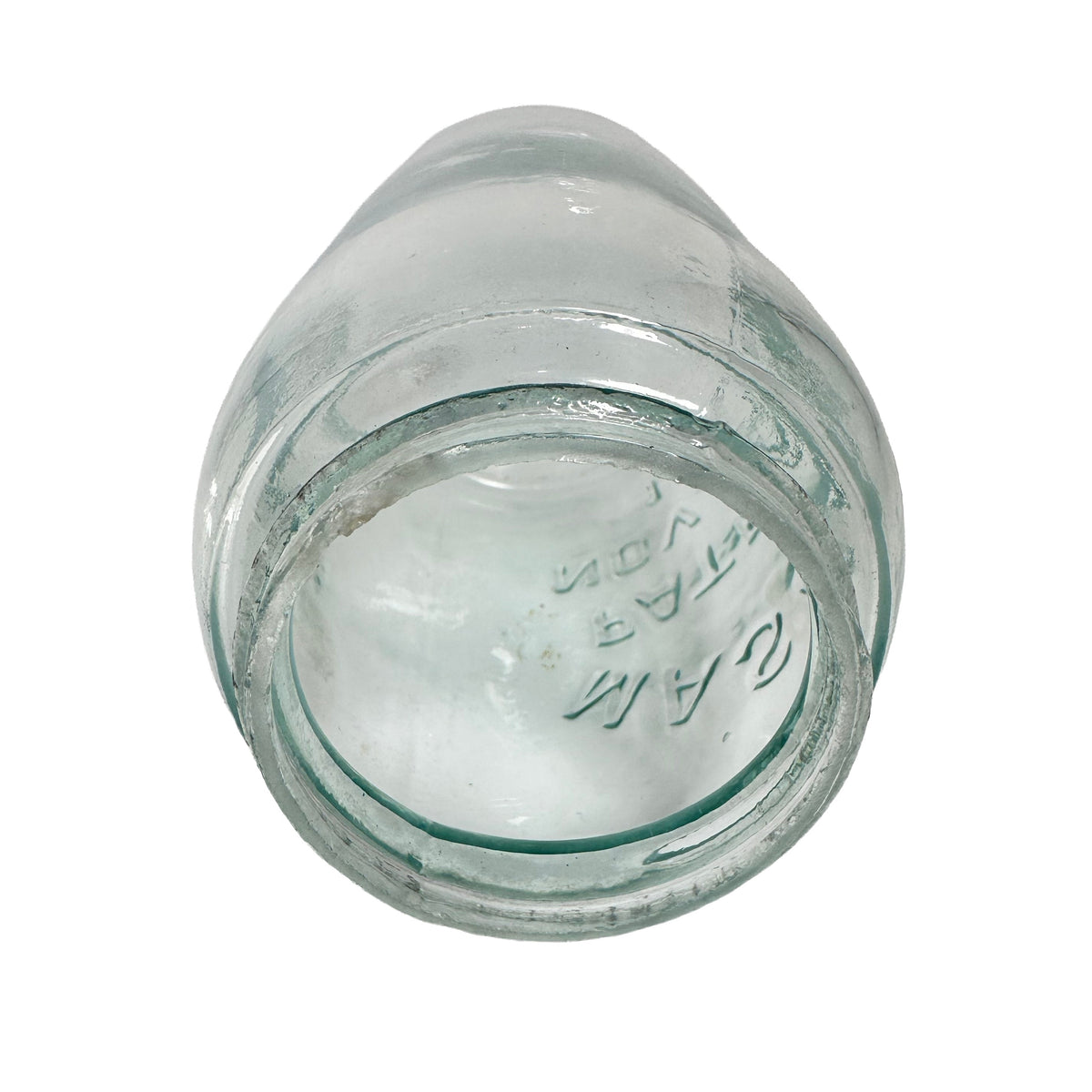
Front: Embossed MASON’S PATENT NOV. 30TH 1858 | Base Mark: Embossed with 17 embossed

Bring a piece of early American food-preservation history into your home with this antique Mason’s patent jar. Its softly green-tinted aqua glass, raised lettering, and vintage Presto glass-and-metal closure evoke the practical beauty of an old-fashioned farmhouse pantry. Originally designed for preserving and storing food, the jar now makes a wonderful addition to an antique kitchen, farmhouse pantry, or fruit jar collection.

Construction is mold-blown aqua glass with a cylindrical body, rounded shoulders, threaded neck, and a ground-style mouth. The jar appears consistent with an early shoulder-seal Mason design. The front is embossed “MASON’S PATENT NOV. 30TH 1858,” referring to John Landis Mason’s historic screw-top jar patent. The base is marked with the number 17. Its pale aqua color, simple cylindrical form, and visible signs of age give it the appeal of a jar that has survived generations of practical use.

The included Presto closure features a glass insert held by an aluminum screw band with a distinctive slotted opening. The band is marked “Tested and Approved by Good Housekeeping.” This is a later-style closure and is not believed to be original to the jar. The jar measures 7" tall with 3 ⅝" base, not including the lid. Its weight is 1 pound.

Highlights:

  • Object: Antique Mason’s patent fruit or food-preservation jar.
  • Embossing: Raised lettering on front reads “MASON’S PATENT NOV. 30TH 1858.”
  • Base Mark: Number 17 embossed on the bottom.
  • Glass Color: Pale aqua with a soft green tint, characteristic of early utilitarian glass.
  • Construction: Mold-blown glass with a cylindrical body, rounded shoulders, and threaded neck.
  • Closure: Metal screw-top closure with glass insert; marked with Good Housekeeping Institute approval wording and additional manufacturer’s information.
  • Date: Antique, with an 1858 patent date. 

Collector’s Note

Mason’s November 30, 1858 patent helped transform home food preservation through the use of a threaded glass jar and screw closure. Antique Mason’s patent jars are collected for their embossed lettering, glass colors, mold variations, and connection to nineteenth-century domestic life. This example combines the appeal of blue-green aqua glass with an embossed base number and a later Presto closure, illustrating how older jars continued to be used and adapted over time.

Antique condition with turning wear along the inside rim, as shown in the close-up photographs. No cracks. The glass has age-related surface wear, and the later Presto aluminum band shows patina. The separate rubber sealing ring is not included. Offered as a collectible and decorative storage piece, not for modern home canning.

Display Appeal

The soft aqua-green tint catches natural light beautifully and adds a subtle touch of color to a kitchen shelf or antique glass collection. Display it alongside old milk bottles, stoneware crocks, or other preserving jars for a collected farmhouse look. The raised lettering, aged metal band, and simple utilitarian shape make it equally appealing as a standalone piece of American kitchen history.

Just a quick heads‑up: the photos reveal details far better than text alone, so they’re worth a close review.

We share as much accurate information as possible about each item—from provenance to condition—but the images often show the nuances best. If you ever need more details, we’re always happy to help.

View full details